



Risks and conditions
Before investing in private capital, it is important that you are aware of the risks associated with this type of financial asset.
Below we will explain the main aspects you should be aware of as an investor with Crescenta.
What are the risks of investing in private capital?
Like any investment, investing in private capital involves a series of risks that investors must consider before making their investment. Below, are the risks you can encounter:
- Liquidity: you must be aware that they are illiquid products, so you must have the financial standing required to undertake them. These are long-term investments, which can exceed 10 years and during which you will have to maintain your investment commitment. In addition, in the first few years you will usually obtain negative returns, since you will only make contributions to the fund and will not receive distributions usually until the end of the fifth year. This is known as the “J Curve”.
- Investment volatility: investments can experience changes in their value, without a guarantee of returns or recouping that invested, especially in unlisted companies.
However, the inclusion of private capital funds in a traditional fixed-income and equity portfolio can also help reduce volatility, as we can see in the chart by Bain&Company. As we increase the exposure to alternatives assets, profitability increases and volatility decreases:
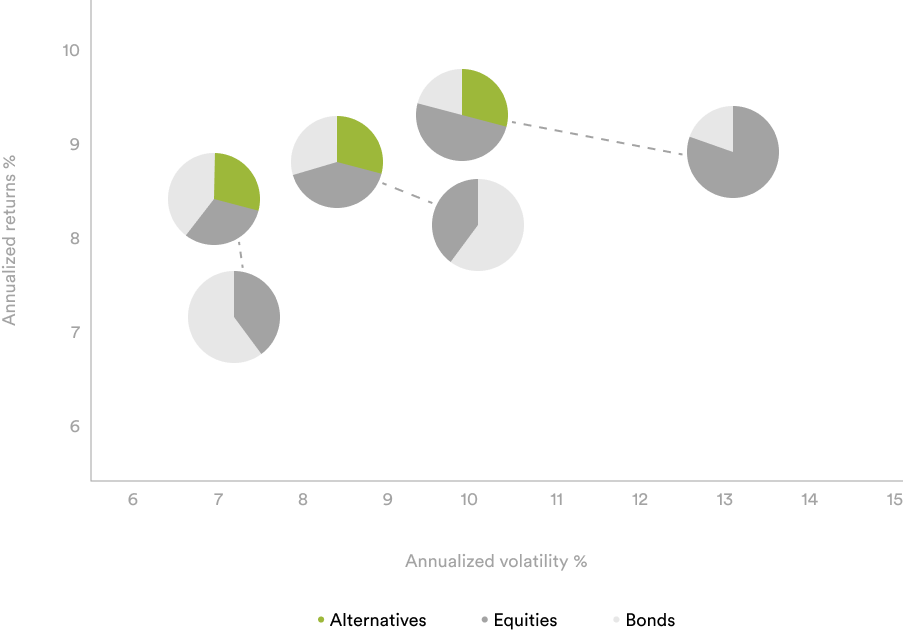
Source: Bloomberg, Burgiss, FactSet, NCREIF, PivotalPath, Standard & Poor’s, J.P. Morgan Asset Management. The alternatives allocation includes hedge funds, real estate, and private equity, with each receiving an equal weight. Portfolios are rebalanced at the start of the year. Equities are represented by the S&P 500 Total Return Index. Bonds are represented by the Bloomberg U.S. Aggregate Total Return Index. Volatility is calculated as the annualized standard deviation of quarterly returns. Data are based on availability as of May 31, 2025..
- Leverage: the use of debt by underlying investments can increase the risk, especially in negative return scenarios.
- Currency: investments made in currencies other than the euro are subject to changes in exchange rates, which can have an effect on the portfolio's value.
- Challenges in the acquisition of investments: the competition for investment opportunities can limit the number of opportunities available and affect the terms and conditions of investments.
- Regulatory and legal changes: changes in tax or legal regulations could have an impact on the return on investments.
- Risk of non-compliance: as an investor, you must fulfil the obligations established in the fund's documentation, otherwise you could face consequences.
- Sensitivity to the environment: environmental, social or political factors can negatively influence the value of investments.
- Fund valuation: the fund's valuation depends on the valuations provided by the management companies of underlying funds, which may differ in time and method from those reported to investors. In addition, the expenses and fees must be deducted from the total value of the investments, which can significantly affect the final value of the fund.
- Conflicts of interest: although they are managed in accordance with current regulations, there is a risk that the interests of the management company, fund and investors come into conflict.
- Limitations on information: we may not have full access to detailed information about the portfolio of underlying funds and their circumstances, which could affect investment decisions.


